

IVF Treatment
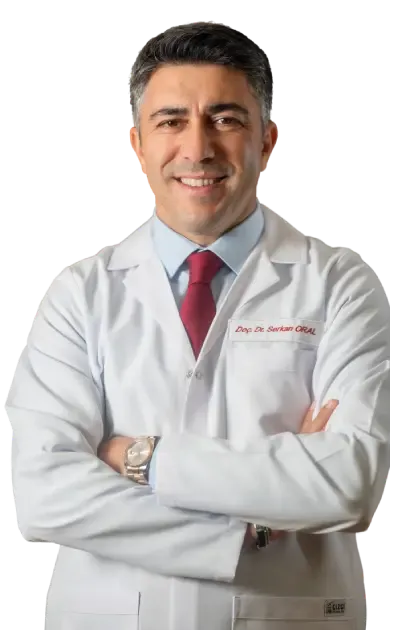
IVF treatment is a personalized process planned from the first examination to embryo transfer. Assoc. Prof. Dr. Serkan Oral informs, supports, and progresses with a focus on success at every stage. The treatment process usually consists of 10 steps and is conducted under one-on-one expert supervision.
- Starting TreatmentThe process is planned with an initial consultation, hormone tests, ultrasound, and couple assessment.
- Transfer and Follow-upCollected eggs are fertilized, quality embryos are selected, and pregnancy is monitored after transfer.
Articles on IVF
- Weak Ovarian Reserve and IVF Treatment
- Twin Pregnancy in IVF
- How Many Days Does IVF Treatment Take?
- Risk of Multiple Pregnancy in IVF
- Needle Method in IVF Treatment
- Calculating Pregnancy Weeks in IVF
- Genetic Screening in IVF
- What are IVF Medications?
- What are the Stages of IVF?
- What is the Age Limit for IVF?
- Who Cannot Get In Vitro Fertilization?
- Embryo Transfer in IVF
- What is Azoospermia, What are its Symptoms, How is it Treated?
- How Long Should the Interval Between Two IVF Trials Be?
- 10 Things to Know Before IVF
- How Does IVF Treatment Begin?
- What is vaccination? How is it done?
- What to Do After IVF in 10 Items
- The 10 Most Frequently Asked Questions About IVF Treatment
- Vaccination and Before in 7 Articles
- Things to Consider After Vaccination
- 11 Common Misconceptions About IVF Treatment
- Infertility Rates and IVF Treatment
- Don't Be Afraid of IVF!
- Is it possible to try again after unsuccessful attempts?
- Egg Collection in IVF Treatment
- How Many Times Is IVF Treatment Attempted?
- Latest Developments in IVF
- Does IVF Threaten the Health of the Expectant Mother?
- How Long Does IVF Take?
- Embryo Quality in IVF
- Stages of IVF Today
- Tests Applied in IVF Treatment
- IVF Law
- Microchip IVF Treatment
- How is Egg Freezing Done?
- Who Can Get Egg Freezing?
- Egg Freezing Process
- Laboratory Procedures in IVF Treatment
- Sperm Treatment in IVF
- Hyperstimulation Syndrome OHSS in IVF Treatment
- How Does In Vitro Fertilization Happen? How Is In Vitro Fertilization Done?
- Psychological Preparation for the IVF Process
- IVF Treatment and Artificial Womb
- Stem Cell and IVF Treatment
- IVF and Breast Cancer
- Sperm Disorder in IVF
- Failed IVF and After
- Is IVF a Difficult Treatment?
- Non-Evidence-Based Treatments in IVF Treatment
- OHSS Syndrome in IVF Treatment
- Psychological Preparation for the IVF Process
- Long Protocol in IVF Treatment
- IVF Law
- Pay Attention to These Before IVF!
- Protein and Its Importance in IVF Treatment
- Possible Side Effects of IVF Treatment
- Frequently Asked Questions About IVF
- Drugs Used in IVF Treatment
- The Role of the Father-to-Be in IVF Treatment
- How to Increase IVF Success Rate?
- Empty Follicle Syndrome in IVF Treatment
- In Vitro Fertilization in Natural Cycle
- Problems Encountered in IVF
- What are the Situations Where In Vitro Fertilization Treatment Is Necessary?
- Does Hysteroscopy/Laparoscopy Before IVF Increase Success?
- Does IVF Procedures Hurt?
- Differences Between IVF and Normal Pregnancy
- Does Stress Affect IVF Success?
- On Which Day Should Embryo Transfer Be Performed?
- Smoking and its Harms in IVF Treatment
- IVF Success Rates
- In Vitro Fertilization Method From Yesterday to Today
- Luteal Phase Support in IVF
- IVF Treatment Costs
- Drug-Free IVF: In Vitro Maturation (IVM)
- Why Does IVF Not Work?
- Who Cannot Get IVF Treatment?
- Why Acupuncture in IVF?
- Who Can Get IVF Treatment?
- Women's Age and IVF
- IVF and Latest Technology
- IVF Center Selection and Its Importance
- Risks of IVF Treatment
- What is Microinjection (ICSI)?
- What is Classical In Vitro Fertilization (IVF)?
- What is IVF?
- History of IVF
- What are the Stages of IVF Treatment?
- What is Preimplantation Genetic Diagnosis (PGD)?
Frequently asked questions
Who is IVF treatment suitable for?
IVF treatment is suitable for couples who cannot have children naturally, individuals with low sperm or egg count and quality, women with blocked fallopian tubes, or unexplained infertility cases. A detailed examination is necessary to determine which method is right for you.
How long does IVF treatment take?
The treatment process usually starts on the 2nd or 3rd day of menstruation and is completed in about 15-20 days. During this time, egg development is monitored, and egg retrieval and embryo transfer procedures are performed.
What is the success rate in IVF?
The success rate depends on many factors such as age, egg reserve, embryo quality, and uterine health. With the personalized planning applied by Assoc. Prof. Dr. Serkan Oral, the success rate is quite high.
Is IVF a painful procedure?
The egg retrieval procedure is performed under light anesthesia and no pain is felt. The transfer procedure is painless and usually takes a short time.
What should be considered after embryo transfer?
Rest is recommended for the first few days after transfer. Heavy exercise, stress, extremely hot baths should be avoided; you should adhere to your doctor's recommendations.
What is frozen embryo transfer?
Instead of fresh transfer, some embryos are frozen and transferred later when the uterus is suitable. With this method, the success rate does not decrease, and it can even be more comfortable sometimes.
Who is genetic screening (PGT) recommended for?
Embryos can be genetically screened before transfer in couples who have experienced recurrent miscarriages, those considering pregnancy at an advanced age, or those who are carriers of genetic diseases.
Is there an age limit for IVF treatment?
IVF can be applied to women up to 45 years old, and for men as long as sperm production continues even at advanced ages. However, the success rate may decrease as age progresses.
What factors affect IVF treatment prices?
Additional procedures such as medications used, genetic testing, and embryo freezing process can affect the treatment cost. For detailed information, you can contact us.
What happens if success is not achieved?
If success is not achieved in the first attempt, a new plan is made by evaluating embryo quality, uterine structure, and genetic factors. The decision to continue treatment is determined by expert opinion.
This page is for information only. Please consult your doctor for diagnosis, treatment and personal health decisions.
If you see an error on this page, write to info@serkanoral.com .