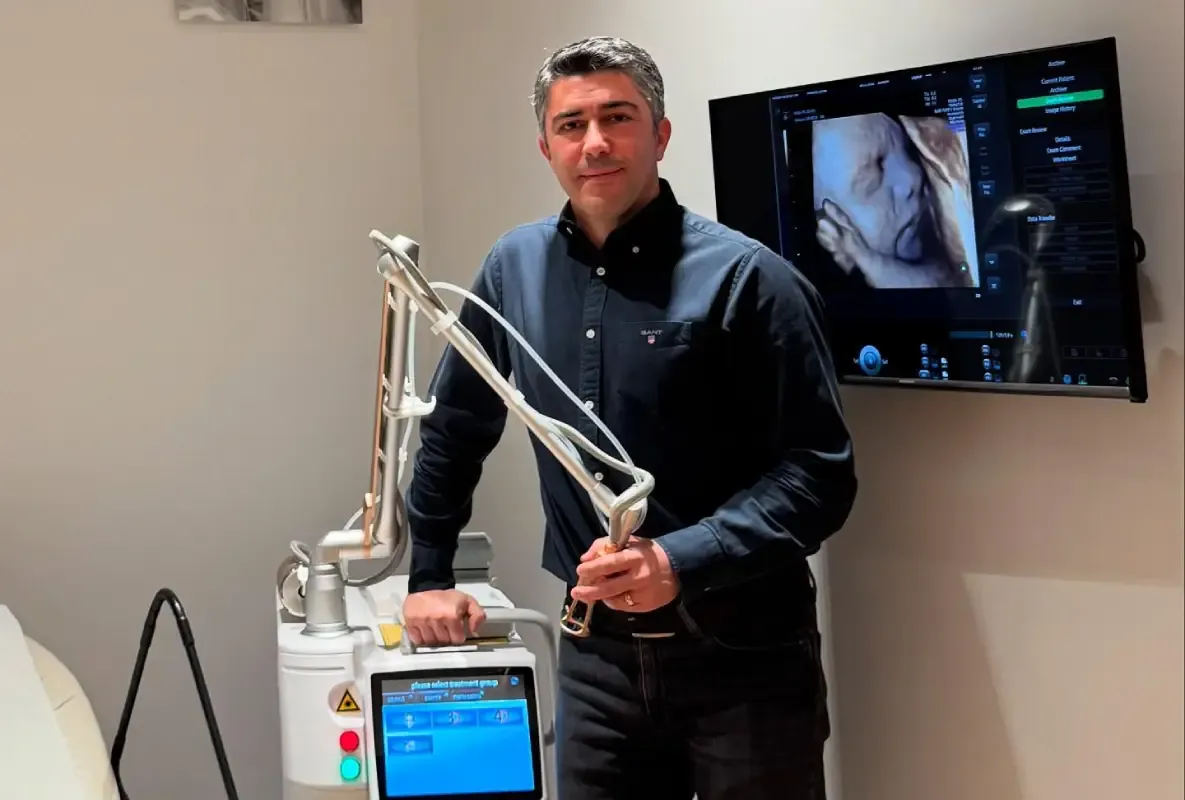
Assoc. Prof. Dr. Serkan Oral Gynecology, obstetrics and IVF specialist
Assoc. Prof. Dr. Serkan Oral follows each patient himself in IVF, infertility, gynecologic surgery, pregnancy care and genital aesthetics, from the first examination to the end of treatment.
Assoc. Prof. Dr. Serkan Oral has been a gynecology and obstetrics specialist since 2002 and an associate professor since 2023. Since 2019 he has lectured in the Department of Obstetrics and Gynecology at Haliç University Faculty of Medicine. He has worked in IVF since 2007, and since 2015 he has provided IVF, laparoscopic surgery and pregnancy care at his own practice.
Personalized Treatment PlanningYour treatment plan is tailored to your age, ovarian reserve, and medical history for the most effective results.
Genetic Diagnosis and Screening OpportunitiesWith PGT and similar genetic tests, the selection of healthy embryos can be ensured.
Psychological Support for CouplesPsychological counseling is provided to help manage stress and anxiety during the treatment process.
Advanced Laboratory InfrastructureEmbryo monitoring and genetic testing are carried out in laboratories equipped with state-of-the-art technology.
Ethical and Transparent ApproachEvery stage of your treatment is conducted clearly, transparently, and in accordance with ethical standards.
Knowing what will happen is the first step to starting treatment with confidence.
1Write your questionMessage on WhatsApp or leave a consultation request.
2Examination and planAt the practice or online. Options, duration and cost are discussed openly.
3Treatment and follow-upDuring and after treatment, check-ups continue with the same doctor.
The doctor’s view on debated topics
Expensive add-ons are not right for everyone. Assoc. Prof. Dr. Serkan Oral answers these questions together with the level of evidence.
Should every couple have genetic screening of the embryo (PGT)?
No, it is not necessary for every couple. Genetic testing of embryos is usually not preferred for couples who are young, have had no failed treatment before, are having their first treatment and have no known genetic disease.
ESHRE does not recommend PGT-A screening for routine use either.
The most important factor in the success of IVF treatment is the woman’s age. After 40, the chance of embryos with chromosomal abnormalities rises. For this reason, a solution should be sought before 40 where possible.
This site gives no success rate of its own for the practice.
The questions asked most about the treatment areas; each answer is explained in full on its own page. You can send any question not answered here on WhatsApp.
When should you see a doctor if pregnancy does not happen?+−
If no pregnancy has occurred within a year despite regular unprotected intercourse, an assessment is made. If the woman is over 35, this period is six months. If a problem is already known, there is no need to wait.
Read more →What are the stages of IVF treatment?+−
Treatment has seven stages: the first consultation and tests, stimulation of the ovaries, ultrasound monitoring, egg collection, fertilisation and embryo monitoring in the laboratory, embryo transfer, and the luteal phase that supports the pregnancy.
It depends on the protocol used, the ovarian response, and whether the transfer is done with a fresh or a frozen embryo. A cycle generally takes three to six weeks. This does not include the first assessment and testing period.
There is no single age limit for egg freezing; the decision depends on ovarian reserve (AMH, FSH, AFC) and general health. Because reserve begins to fall after 35, planning before that age is recommended.
Yes. In Turkey, single women can have egg freezing in cases of medical need, such as cancer treatment, low ovarian reserve, a history of early menopause or ovarian surgery, with a health board report from three specialist doctors.
Read more →Does polycystic ovary syndrome (PCOS, newly named PMOS) prevent pregnancy?+−
If a woman who wants to have a child has polycystic ovary syndrome, this problem must be resolved before pregnancy. If she still cannot conceive naturally after it is resolved, assisted reproduction treatments should be considered. Women treated for polycystic ovary syndrome can have children with IVF treatment.
The link between fibroids and infertility or pregnancy is not certain. Some women with fibroids conceive and carry their pregnancy without problems. However, submucosal fibroids, which sit inside the womb, are reported to cause infertility and should be removed.
Pregnancy care should begin while the couple are still thinking about having a child, and the mother-to-be should learn every step needed before pregnancy. The doctor will also tell her that taking folic acid before pregnancy is very good for the baby’s health.